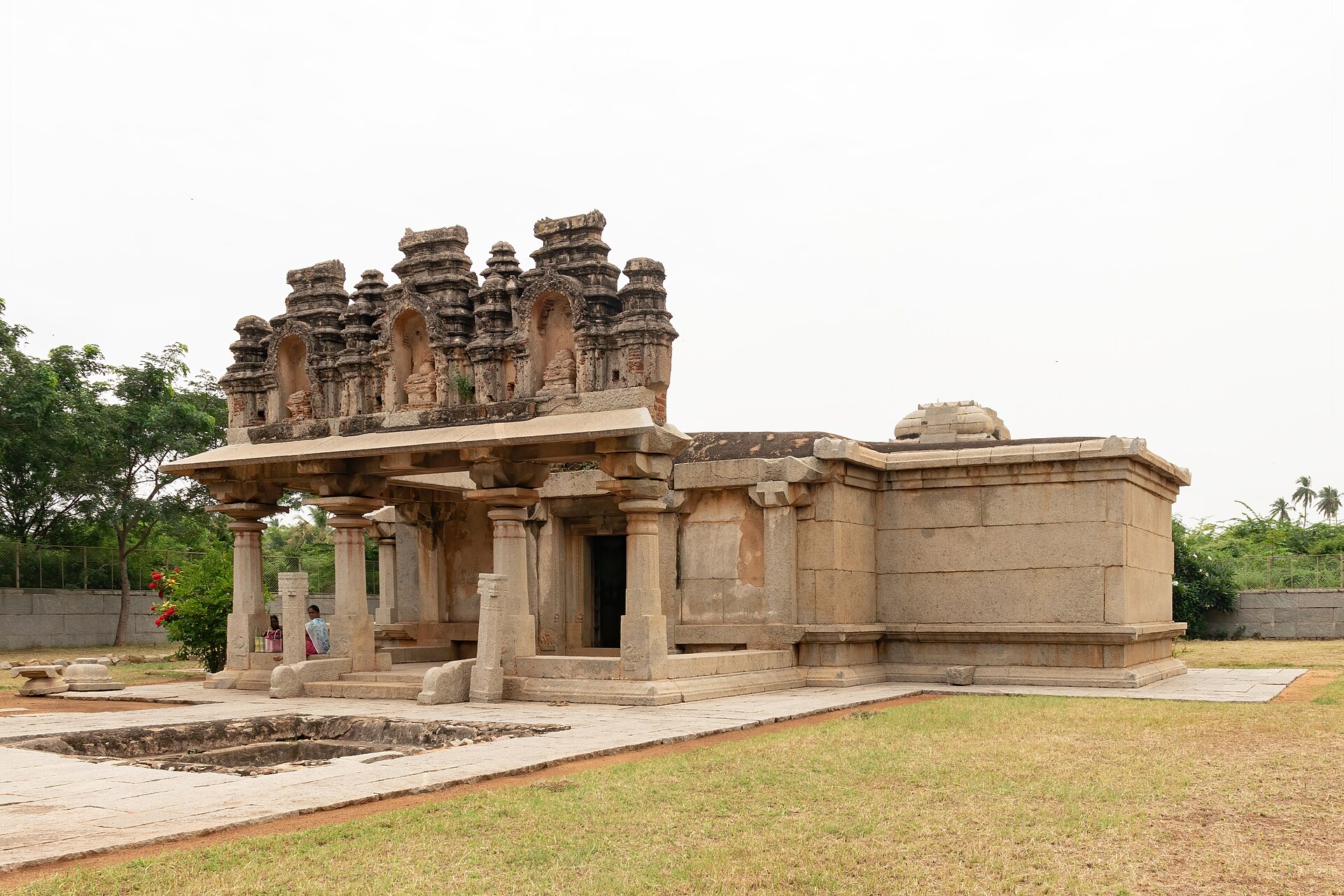
Featured image: the Ganagitti Jain temple at Hampi, Karnataka, built in 1386, near which the Archaeological Survey of India has now uncovered two more Vijayanagara temples. Photo: iMahesh, Wikimedia Commons, CC BY-SA 4.0.
This week’s roundup covers 14 to 21 November 2026: two Vijayanagara temples at Hampi, more than 1,500 megalithic graves on a Telangana hill, gold for the god at Tirumala, a crowded cemetery at Terenouthis, a beer loan from Hammurabi’s time, a new date for the fall of Babylon, the oldest clay figurines in the Levant, Homo erectus in the rainforest, a Danish fisherman who may have eaten farmers’ food, milk and wine for Menorca’s dead, and a new book on the Danube frontier. Each item links to its source.
India and South Asia
Two Vijayanagara temples at Hampi
Excavations by the Archaeological Survey of India near the Ganagitti Jain temple at Hampi, the oldest Jain shrine at the site, built in 1386 under Bukkaraya II by his minister Iruguppa Dandanayaka, have exposed the remains of two temples, one to Vishnu and one to Shiva. The Vishnu shrine is a partly sunken dwikuta, or two-shrined, temple of dressed granite laid without mortar, with its sanctum, a sunken entrance hall, a moulded basement, lime floors and stone benches, and high-relief door guardians at the foot of the jambs. Its brick tower is gone. Finds include a headless kneeling winged figure resembling Garuda, reliefs of Nagadevi and Nagadeva, entwined serpent stones and a standing Vishnu. The Shiva temple survives as a raised, moulded granite plinth around a central chamber, and pillars at the site carry Varaha, the boar avatar of Vishnu. Source: IANS, 14 November.
1,500 megalithic graves at Rakasi Mitta
More than 1,500 megalithic burial structures, among them dolmens and dolmenoid cists, have been recorded on Rakasi Mitta hill near Mamidigudem in Bhadradri Kothagudem district, Telangana, in the forested Kinnerasani river basin. The survey team, Reddy Ratnakar Reddy of the Mitti Foundation, Sangu Venkat Reddy of Kakatiya University and K Rajkumar, provisionally date them to between 1200 and 300 BC and think the site could rank among the five richest megalithic sites in India. Some chambers have square doorways that could be sealed with slabs and hold two to four stone sarcophagi. More than 100 human-shaped stones stand before the graves, two of them rare female figures, the taller over six feet high. Microlithic tools on the hill hint at earlier visitors, and the team has urged the state archaeology department to study the site. Source: The New Indian Express, 17 November.
Gold for the god at Tirumala
The Archaeological Survey of India’s epigraphy branch has begun digitising its paper impressions of nearly 100 inscriptions from the prakara walls of the Sri Venkateswara temple at Tirumala for the BharatSHRI online archive, with fresh copying of the rest due from 1 December. Two Telugu records on the north wall of the first prakara, dated 10 February 1513, list gifts from Chinnajiamma and Tirumalamma, queens of the Vijayanagara emperor Krishnadevaraya: two gold cups of 374 tukas each for offering milk to the god after the night worship, the ekanta seva, and a gold plate of 10 tukas to hold perfumes. The gifts were made on the first of Krishnadevaraya’s seven documented visits to the hill shrine. Source: The Times of India, 17 November.
Egypt and the Near East
Hundreds of coffins at Terenouthis
A Supreme Council of Antiquities mission at Kom Abu Billo in Menoufiya, the site of ancient Terenouthis at the eastern entrance to the natron-rich Wadi El Natrun, has found an open burial courtyard with hundreds of stone and pottery coffins, wooden coffin remains, vaulted mud-brick tombs and a limestone-lined tomb. The cemetery dates mainly to the early Ptolemaic period, the third and second centuries BC, with some burials from the end of the Late Period, and seems to have served mostly the middle class. Many coffins were broken by looters and quarrymen long ago, but finds include gold tongues, scarabs, faience ushabtis, two falcon burials and terracottas of Isis-Aphrodite, one showing her on a lotus nursing the infant Harpocrates. Source: Daily News Egypt, 18 November; Archaeology, 19 November.
A beer loan at Tell Muhammad
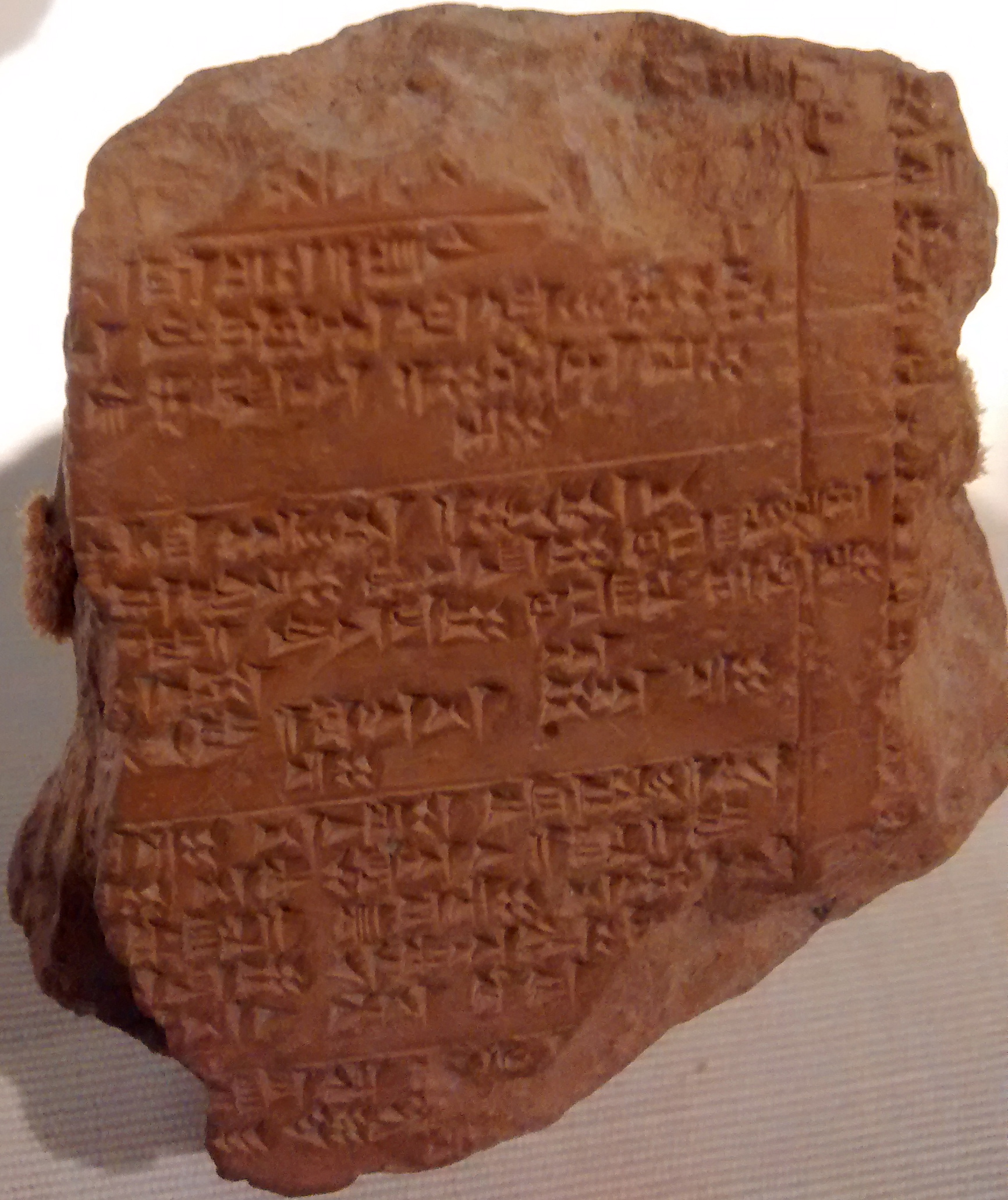
The University of Catania’s sixth season at Tell Muhammad, on the edge of Baghdad, found a cuneiform tablet, perhaps of the time of Hammurabi and Samsu-iluna of Babylon (about 1792 to 1712 BC), recording a loan of barley and of kurunnum, a prized Mesopotamian beer, made before two witnesses. It lay on the floor of a room with a semicircular mud-brick counter facing the street, four circular installations and a mud-brick basin that may have served for brewing or baking. The team, led by Nicola Laneri, also traced more of a city wall about five metres thick and a channel of reed mats and clay that fed rainwater to a large cistern inside the wall. Source: UnictMagazine (in Italian); Archaeology, 20 November.
Tree rings, a volcano and the fall of Babylon
A team led by Charlotte Pearson of the University of Arizona measured radiocarbon in single tree rings from Anatolian timbers to fix a calendar-dated chronology running from 2072 to 744 BC. Felling dates for timbers from two palaces in Turkey, built around 1837 to 1836 BC and around 1778 BC, were tied to texts dated by the Assyrian calendar. Babylonian records of Venus that note when the planet was hard to see were matched against ice-core evidence for volcanic haze, the best fit being the eruption of Aniakchak in Alaska around 1628 to 1627 BC. Together the evidence favours the middle-low chronology, under which Babylon fell around 1587 BC. The rings also record a severe drought from 1194 to 1192 BC, two years before the Hittite capital Hattusa was sacked. The paper is in PNAS. Source: Archaeology News Online Magazine, 17 November; PNAS.
Clay figurines 15,000 years old
A study in PLOS One reports 154 figurative clay objects from three Natufian sites in Israel, dated between about 15,000 and 11,650 years ago, the earliest clay figurative tradition known in south-west Asia. They show birds, mammals and humans, some with traces of orange and red colour, and fingerprints show that children as well as adults made them. “Thousands of years before agriculture and pottery emerged, people were already using clay to create figures,” said Laurent Davin of the Hebrew University of Jerusalem. Source: Archaeology, 16 November; PLOS One.
East Asia
Homo erectus in the rainforest
Eight teeth identified as Homo erectus, from Baxian and Naxian, two sister caves in Guangxi, southern China, have been dated by 43 radiometric ages from five methods to between 324,000 and 184,000 years ago, much later than the roughly 400,000 years previously established for undoubted Homo erectus fossils in the region. Isotopes and trace elements in the teeth point to life in closed rainforest, a habitat thought to be the domain of Homo sapiens alone, and strontium values suggest some individuals moved as far as 250 kilometres in childhood. “This has huge implications for the timeline of Homo erectus as we attempt to understand the causes of its extinction,” said Kira Westaway of Macquarie University. The paper is in Nature. Source: Nature, 18 November; Archaeology, 19 November.
Britain and Europe
Rødhals Man, between two worlds
Rødhals Man, a skeleton found in a shell midden on the Danish island of Sejerø in 1956, belonged by his DNA to western European hunter-gatherers. New radiocarbon dates, corrected for the old carbon in a fish-rich diet, put him at about 3890 to 3770 BC, when the first farmers were reaching Denmark. Layers of dentine in his teeth show shellfish, flatfish and eels in childhood, then more protein from land food in adolescence than is usual for Danish hunter-fishers. Anders Fischer of the University of Gothenburg, John Meadows of the Leibniz Centre for Archaeology and colleagues suggest farmers supplied that food, and note that his grave, framed with flat stones, resembles those of the first farmers. The study is in Antiquity. Source: Archaeology, 17 November; Antiquity.
Milk and wine for Menorca’s dead
Residue analysis of 34 vessels from Cave 45 at Calescoves, a cliff cemetery of rock-cut tombs near Alaior on Menorca, shows that the island’s small high-bottomed vessels of the Late Iron Age, more than 2,000 years ago, mainly held dairy products. Wine turned up only in a few locally made pots in foreign styles, chiefly Punic, the first evidence of wine in a Menorcan funerary rite. A small spouted vessel from inside the burial chamber held milk and served as a baby’s feeding bottle. “This baby bottle speaks to us of child-rearing and care,” said Margalida Coll of Pompeu Fabra University. The study is in the Journal of Archaeological Science. Source: Universitat Autònoma de Barcelona, 16 November; Archaeology, 18 November.
New books
Crossing the Danube
Susanne E. Hakenbeck, an associate professor in archaeology at Cambridge, follows life along the Roman Empire’s Danube frontier over four centuries, using isotopes, ancient DNA, inscriptions and plant remains alongside the Roman texts, with chapters on the origins of the Goths and Huns. It was released on 17 November; Kirkus says it shows how an empire and so-called barbarians “made each other.” Source: Kirkus Reviews.
The previous week’s news is in the roundup for 7 to 14 November. If we have missed a story, send it through the contact page and we will look at it for the next roundup.